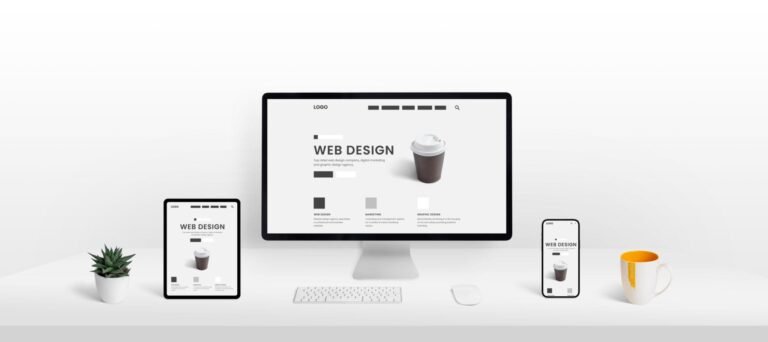
A corporate website template should help your company survive the quiet background check a buyer runs before making contact. The test is simple: can a skeptical stranger confirm who you are, who runs the firm and what you have actually done? Choose the template that makes those answers easiest to publish, then fill it with facts rather than adjectives.
Design matters less here than most people expect. A plain site with named people and specific work beats a glossy one that could belong to anyone.
The three minutes nobody tells you about
Imagine a facilities manager at a hospital group. She has been told to find an engineering consultancy for a building review. Her manager handed her your name and two others. She will never fill in your form unless your site gets through her checks, and she will not tell you when it fails.
Here is what she does, roughly in this order:
- Opens the About page to see whether real people run the company
- Looks for work similar to her problem
- Scans the footer for a registered company name and a physical address
- Checks the news or blog section to see if anything has been updated recently
- Reads one service page to find out if you understand her situation
None of this involves animation, parallax or a video header. All of it depends on which pages your template gives you and how well those pages hold real content.
What a corporate website template must hold
Treat this as a list of containers, then ask whether you have something true to put into each one. An empty container hurts more than a missing one.
A leadership or team layout
Look for space for a name, a role, a short background and a real photo. Skip layouts that only work with identical studio portraits, since you may not have them. If two partners run the firm, two good profiles are enough.
A case study layout that tells a story
Good ones separate the client’s problem, the work done and the result. Bad ones are a logo wall with a hover effect. If you cannot name clients, write about the type of work and say so honestly.
Service pages that can go deep
One service per page, with room for who it suits, how the work runs and what the client receives. A template with one “Services” grid and nothing beneath it will leave you short when someone clicks through.
A contact page that looks staffed
Address, phone, email and a short form. A form alone can feel like a dead end to a corporate buyer.
Choosing between three Marketplace designs
Three templates in the Marketplace suit company sites. All three come in HTML, Vue.js and Next.js versions, cost $39 under the Regular License, and download instantly.
- Advize fits consulting firms and advisers, because it already has process and team pages. Start here if your sale depends on explaining how you work.
- Arteina suits agencies, consultants and growing companies that talk mostly about growth and outcomes.
- Arteiza leans toward agencies, tech firms and professional services that want a broader company site.
If you sit between two of them, count your real content. A firm with a clear, repeatable method should favor Advize. A firm with few public projects but several service lines may do better with Arteiza.
Words that make a credible company look vague
Most corporate sites sound alike because they avoid saying anything checkable. Go through your draft and replace these patterns:
- “We deliver solutions” becomes the actual thing: “We review commercial buildings for fire safety compliance.”
- “A team of passionate experts” becomes the people’s names and what each one does.
- “Global reach” becomes the places you have actually worked, or nothing at all.
- “Trusted by leading brands” stays only if you can name them and have their permission.
Read each sentence and ask whether a competitor could paste it onto their site unchanged. If so, rewrite it. Also clear out the small signs of neglect: a copyright line stuck on an old year, a news page with one post, staff who left long ago.
Getting the words and setup done
Layout rarely holds a company back. Writing does. Most firms stall for months because nobody has time to draft the service pages.
Sending this out as a job can break that logjam. With our web development service, AI turns your notes, proposals and old brochures into a first draft of each page and fits it into the template. An expert in that kind of work then cuts vague claims, checks that each statement can be supported from what you supplied, tests the forms and reviews the mobile layout. Anything the draft could not confirm goes back to you as a question instead of being guessed.
A 5-page website costs $799 and takes a week. If the firm needs only the words, website copywriting can be ordered on its own. Every quote is fixed before work begins, and if a date is missed, the task is refunded in full.
One more check before you launch
Ask someone outside the company to spend three minutes on the site and then answer these questions out loud:
- What does this company do?
- Who would you call there?
- What is one piece of work they have done?
- Where are they based?
If they hesitate on any answer, you know which page to fix first. This costs nothing and catches more problems than another design round.
FAQ on company websites
How many pages does a small firm really need?
Often five: home, services, about, one page of proof, and contact. Add pages when you have something true to put on them, not because the template includes them.
We cannot name our clients. What can we show?
Describe the sector, the problem and the work without naming the company, and say plainly that the client is confidential. Readers accept that far more readily than a page with no examples.
Which version should a non-technical team choose?
The HTML version is simplest to host. If your team will publish news often, ask about connecting a content system, because editing raw files every week gets old quickly.
Can the Regular License cover a client’s site?
Yes. That license pays for a single end product, built for your own firm or for a single client. A second site takes a second license.
Want your company site drafted from your own documents and checked by a person before anyone sees it? Start a Task and send what you have, in any state.